
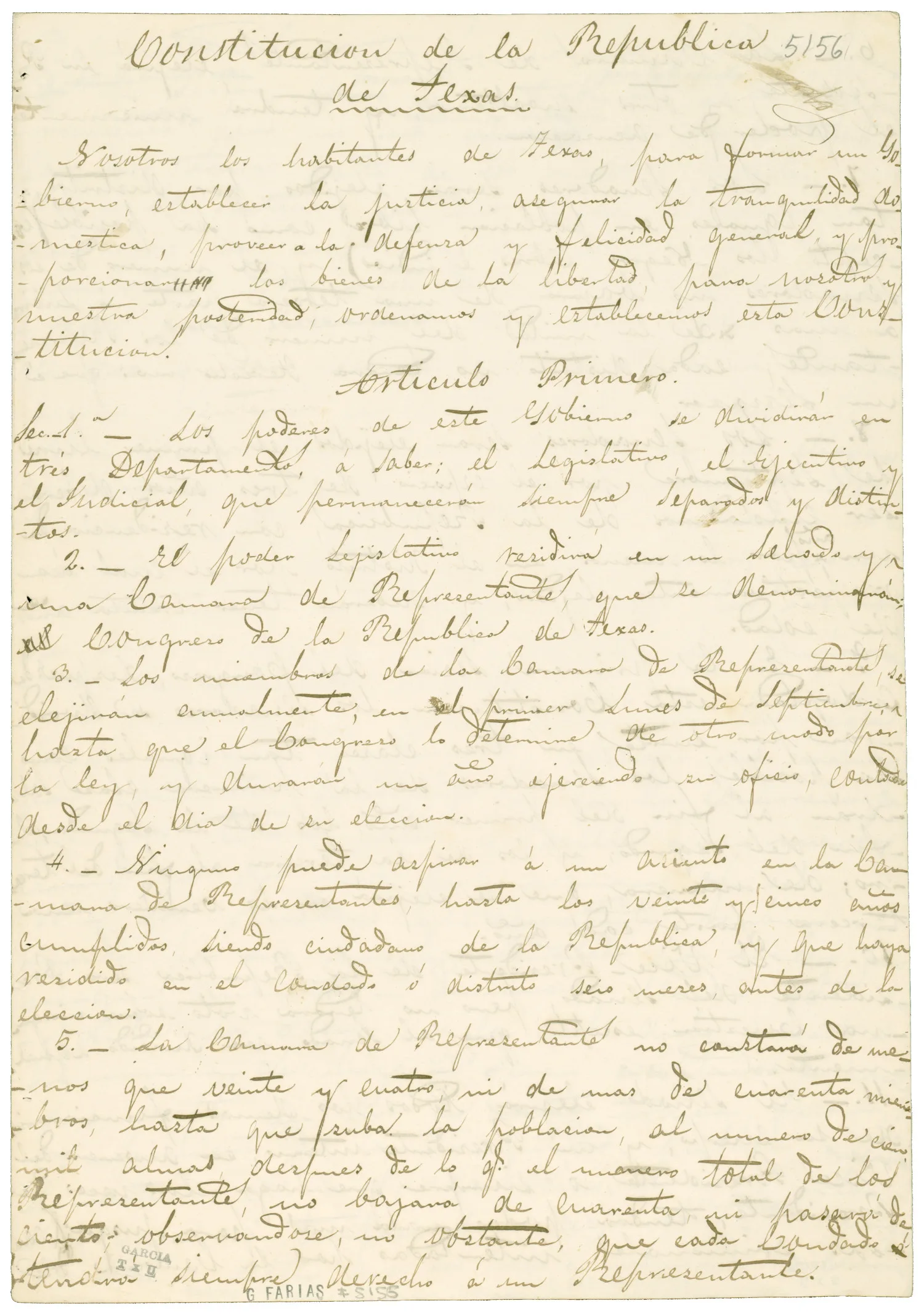
The Constitution of 1876
The Texas Legislative Council describes the Constitution of 1876 as "the fifth since statehood." It began with 289 sections in 17 articles. Amendments have added 244 sections and removed 118, so it now has 415.
As of the Legislative Council's May 2026 count, voters have approved 547 of the 731 amendments the Legislature has proposed since 1876, and rejected 181. Two of the approved amendments were never certified because of court challenges, and three proposals never reached the ballot.
How an Amendment Is Made
Article 17, Section 1 sets out the whole process.
- The Legislature proposes. A proposed amendment takes the form of a joint resolution. It can be offered in a regular session, or in a special session if the governor has opened that subject.
- Two-thirds of each house must agree. The vote is two-thirds of all members elected, not just those present: 21 of 31 senators and 100 of 150 representatives when every seat is filled. The vote is recorded by name in the journals.
- The governor does not sign it. Joint resolutions proposing amendments go straight to the secretary of state. The governor has no veto over them.
- The Legislature sets the election date. The resolution itself names the date of the election.
- The public is notified. The secretary of state writes a brief explanatory statement of each amendment, approved by the attorney general, and it runs twice in newspapers across Texas, the first time 50 to 60 days before the election. The full text is posted at every county courthouse at least 30 days before.
- The ballot language is set. If the Legislature did not write the wording of the proposition, the secretary of state does, in terms that "clearly express its scope and character" (Election Code Section 274.001). The secretary of state also draws lots to set the order of the propositions on the ballot.
- Voters decide. If a majority of the votes cast on an amendment are in favor, it becomes part of the constitution, and the governor proclaims it.
Texas courts have held that an adopted amendment takes effect on the date the official canvass shows it passed, unless the amendment names another date.
When the Elections Happen
The constitution leaves the date to the Legislature, and in practice amendment elections are held on the uniform election date in November. Because most amendments are proposed in the regular sessions of odd-numbered years, most amendment elections have come in November of those years. That is a pattern in the record, not a rule in the constitution.
The most recent was November 4, 2025, when voters decided 17 amendments proposed by the 89th Legislature. Their results are in the Legislative Council's publication listed below.
No constitutional amendments are on the November 3, 2026 ballot. No official source lists any, and the Legislature has held no session since its second special session ended on September 4, 2025. Local propositions from cities, counties, and school districts may still appear, so check your county's sample ballot.
Finding an Amendment
The Legislative Reference Library keeps a searchable record of every amendment proposed since 1876, with the resolution, the ballot wording, and the vote. The Legislative Council's Amendments to the Texas Constitution Since 1876 lists each one by election.
Sources
- Texas Constitution, Article 17 (Mode of Amending the Constitution)
- Texas Legislative Council, Amendments to the Texas Constitution Since 1876 (May 2026)
- Texas Legislative Council, The Legislative Process in Texas (July 2025)
- Texas Election Code, Chapter 274 (constitutional amendment ballots)
- Texas Secretary of State, canvass dates of adopted amendments
- Texas Legislative Reference Library, constitutional amendments search